

I’ve lived through both the birth and slow death of the “information highway.” What once felt like a human commons is now a strip mall of ads and algorithms. Here’s what we’ve lost — and why it matters for the digital future we’re building.
Why Canadians Are Being Blindsided: The Broken Infrastructure of Communication
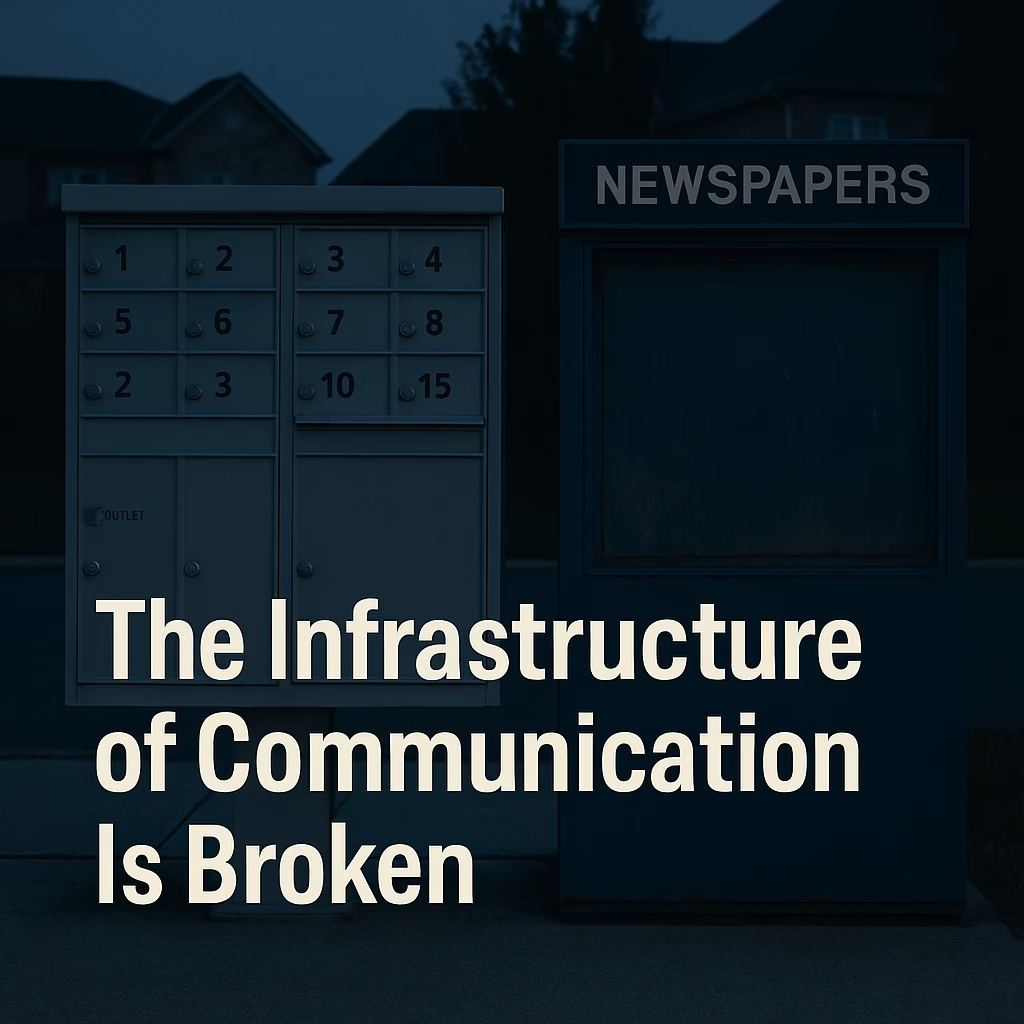
Canadians aren’t apathetic—they’re structurally cut off. When headlines narrow to five stories a day and algorithms reward outrage over substance, the decisions that shape daily life arrive without warning. Half of Canadians don’t even know about a planned 15% federal spending cut. Meanwhile, local news—the old “town hall” that published council agendas and amplified consultations—has collapsed into news deserts. This essay explains why our Broken Infrastructure of Communication blindsides families at the kitchen table (from coffee prices to hospital changes), how fragmentation across generations deepens the problem, where other jurisdictions are succeeding (Taiwan, Barcelona, Reykjavík, UK), and what governments, journalists, and citizens can do right now to rebuild civic connection. If democracy depends on informed citizens, then fixing the information plumbing is as urgent as fixing bridges or power lines.
Freedom Found Close to Home

This summer reminded me that freedom isn’t always about how far we travel, but how deeply we root ourselves in the places close to home. From gardens and conservation trails to Collingwood apples and Canadian markets, I found both inspiration and resilience. As fall begins, I’m carrying that lesson—and a well-stocked pantry—into the months ahead.
No Going Back: Families in an Age of Scarcity

The world is in flux, and certainty is no longer a reliable guide. What we can change is how we prepare ourselves and our children for a messy, unpredictable future. This essay explores why resilience is the best inheritance we can pass on, inspired by the profound lessons learned from a war bride. It’s a journey from expectation to resourcefulness, proving that true freedom comes not from conformity, but from community and the practice of lifelong learning.
Rebuilding the Missing Middle in Food Systems: Community-First Infrastructure for Resilience and Jobs

Rebuilding the missing middle in food systems is about more than farming. It’s about sovereignty, resilience, and local jobs. From Canada to Europe to the Global South, communities are proving that investing in food hubs, regional processors, and short supply chains creates employment, strengthens SMEs, and protects against global shocks.

From Free Trade to Fortress Canada?
Prime Minister Mark Carney calls it a rupture, not a transition. With a C$5 billion Strategic Response Fund, a “Buy Canadian” procurement push, and a pause on the EV mandate, Canada is stepping away from free-trade assumptions and embracing mercantilist tools. The goal: cushion industries, protect jobs, and position Canadians ahead of a seismic global shift in how trade works.

How Municipalities Can Grow Back the Missing Middle in Canada’s Food System

Canada’s food system suffers from a hollowed-out “missing middle”: thousands of farmers at one end, a few dominant multinationals at the other, and too few regional processors, packers, and distributors in between. That gap means jobs lost, food dollars drained, and resilience undermined. But municipalities are not powerless. Councils control zoning, procurement, and financing tools that can rebuild the middle, create jobs, and strengthen local economies. This article lays out five concrete steps—from zoning food hubs and cold storage to setting procurement targets and convening regional food chambers—that communities can adopt right now. It also provides adaptable memos and talking points that residents can use to bring the issue directly to councils, service clubs, and NGOs. If Canada wants Canadian food on Canadian plates, the work begins close to home.