
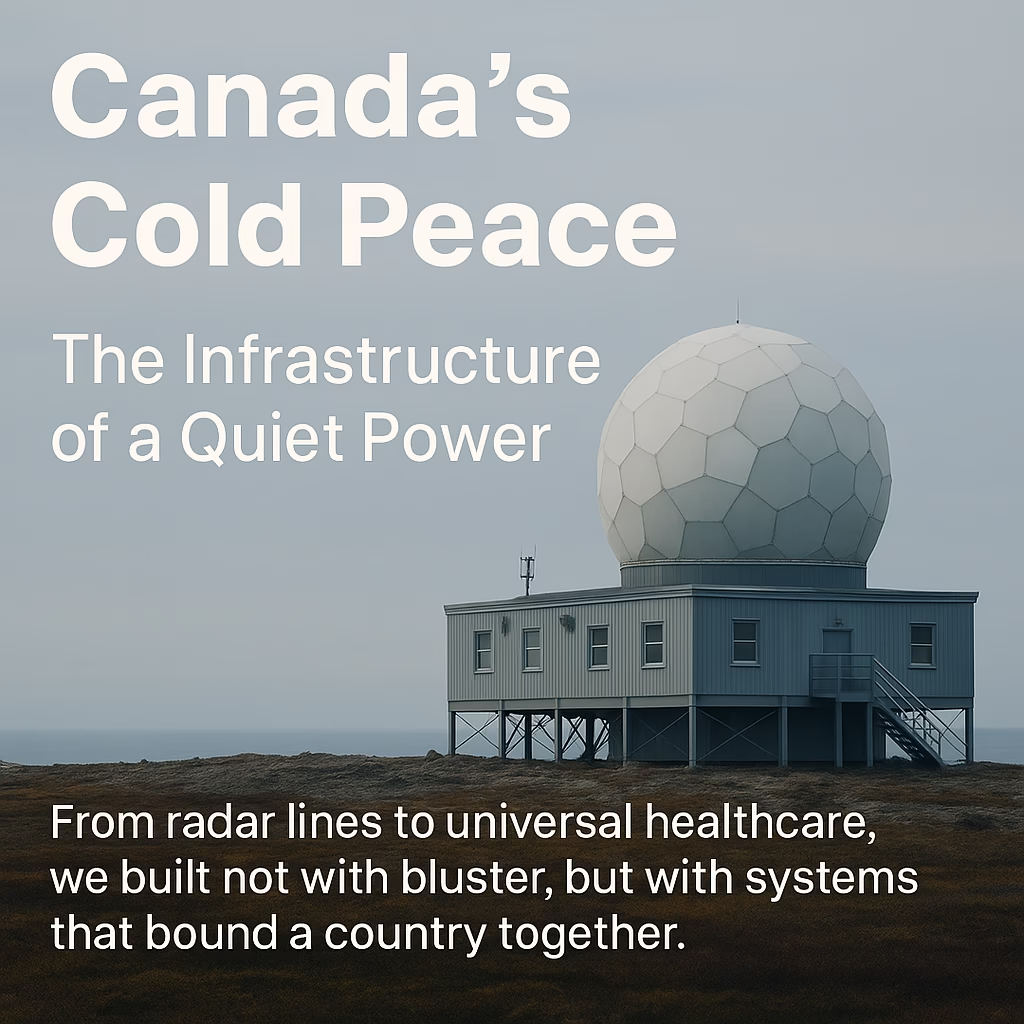
Peacekeeping shaped Canada’s identity, but today’s threats demand something more. Chapter 6 explores why readiness — from cyber resilience to climate response — is now the quiet foundation of national security.
From Build-Up to Breakdown | A Quiet Reckoning Chapter 3

Between 1968 and 1994, Canada kept building—but stopped building for itself. This chapter of A Quiet Reckoning traces how deregulation, devolution, and NAFTA quietly redirected Canada’s national project, weakening federal capacity and deepening regional divides. A story of quiet trade-offs that still shape today’s sovereignty debates.
Why Tidewater Access Defines Canada’s Next Century

Canada’s access to tidewater — our ability to reach the Atlantic, Pacific, and Arctic on our own terms — shapes far more than trade. It influences our sovereignty, our climate commitments, and our economic resilience in a world where shipping routes, critical minerals, and Arctic corridors are becoming geopolitical battlegrounds. This longform explainer breaks down why tidewater access matters, how our geography both helps and hinders us, and what Canada must build to remain a self-determining nation in a rapidly changing century.
After the Age of Acceleration: Turning Technological Abundance Into Renewal

For nearly a century, we’ve lived in humanity’s long summer — an age of exponential growth and instant innovation. But every season has its limits. As technology reaches its natural boundaries and societies grow weary of constant acceleration, a new challenge emerges: learning to renew rather than to consume. After the Age of Acceleration reflects on what it means to move from growth to stewardship — and how Canada, uniquely, might lead the repair economy ahead.
The Wrong Fixation: Why Canada’s Healthcare Crisis Is a Provincial Accounting Problem

Canada’s healthcare debate isn’t just about how much Ottawa pays — it’s about what happens after the cheque clears. Provinces collect the funds, but too often, the trail goes dark. Until Canadians can trace their healthcare dollars from transfer to treatment, the wait in the room — and the wait for answers — will only grow longer.
Canada’s ASEAN Bridge: Building Strength in a World of Shifting Tides

The Calm After the Storm When Mark Carney stepped to the podium in Kuala Lumpur, his tone was steady — the kind of composure that comes from long years at the financial front lines. Behind him, the ASEAN banners glowed in blue and gold: Inclusivity and Sustainability. He thanked his Malaysian hosts, spoke of hospitality, then — without a hint …
Who Pays for Growth? The Spider Web Beneath the Streets
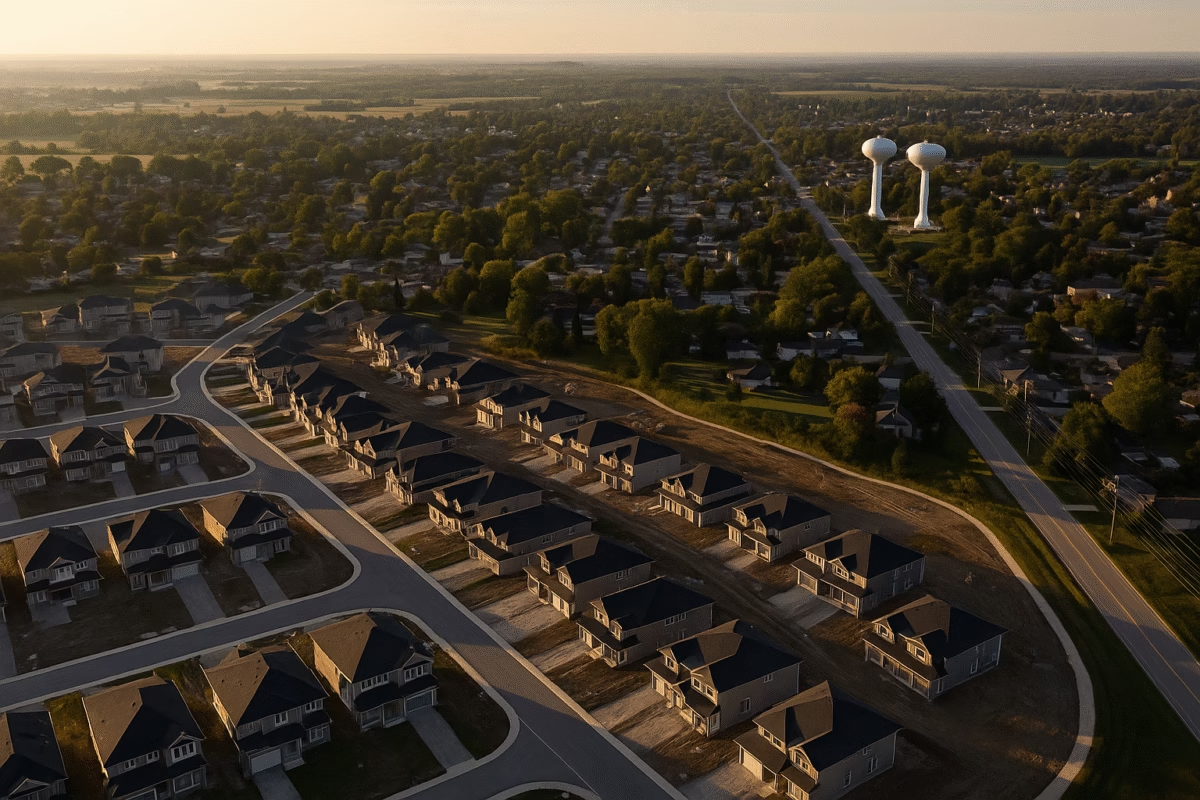
When new neighbourhoods rise on the edge of town, most of us see the houses, not the hidden invoices. Development Charges — the one-time fees builders pay to fund roads, water lines, and parks — are meant to ensure growth pays its own way.
But what happens when those fees are frozen, reduced, or quietly delayed? This full-length Between the Lines investigation follows the money beneath our streets, tracing how towns like Wasaga Beach, Ontario keep the pipes flowing while senior governments pull the strings.
The Hidden Tax on the Grocery Bill

Buying food in Canada has never been more confusing—or more revealing. Every grocery flyer screams savings, but behind those prices lie deeper costs we’re all paying: in public health, in exhausted farms, and in the slow erosion of what “value” used to mean. The Hidden Tax on the Grocery Bill follows that invisible trail—from grocery aisles to data gaps—and asks how Canada can afford not to rebuild a fairer food system.
1

Zero-Sum Thinking in a Non-Zero World
Canada is doing the right things abroad—expanding trade, building trust, and strengthening alliances—but at home, zero-sum politics are getting loud. When domestic squabbling overshadows cooperation, it doesn’t just divide Canadians; it erodes our credibility overseas. This piece looks at how to spot the zero-sum mindset in our media and what ordinary citizens can do to shift the conversation back to growth, trust, and shared success.