

From farmers’ markets to space launches, September reminds us that Canadian sovereignty and community resilience aren’t built in boardrooms — they grow in soil, thrive in classrooms, and are celebrated at kitchen tables.
The Story Starts with a Pumpkin
Last weekend, I watched a young girl at our local farmers’ market struggle to carry a pumpkin nearly as big as herself. Her grandmother laughed, scooping up both child and gourd with practiced ease. “This one’s for pie,” she said, pointing to the orange giant. “These are for soup,” she added, gathering smaller sugar pumpkins into her basket.
It was such an ordinary moment. Yet standing there among the late-summer abundance—baskets overflowing with carrots, tomatoes, and pears—I realized I was witnessing something extraordinary: Canadian sovereignty in action.
Not the kind debated in Parliament or negotiated in trade deals, but the grassroots variety that grows from soil and spreads through communities. The kind you can taste, touch, and take home in a basket.

What Canadian Sovereignty and Community Resilience Actually Look Like
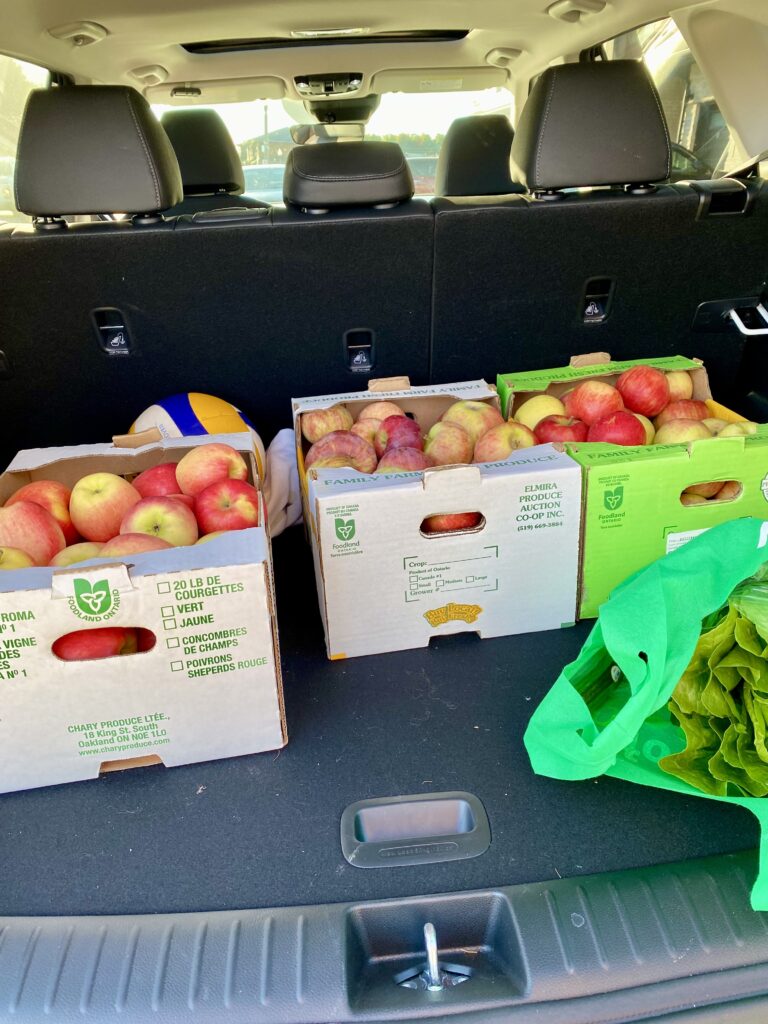
Here’s what struck me: every transaction at that market was an act of national resilience. When families choose local food over imported alternatives, they’re not just buying dinner—they’re voting for supply chains that can’t be disrupted by global crises. They’re supporting farmers who understand our soil, our seasons, our communities.
This isn’t romantic nostalgia. It’s strategic thinking disguised as weekend shopping.
Consider the numbers: Farm to Cafeteria Canada now connects 296 schools with local producers, feeding 88,000 students across every province and territory. Picture a student in Yellowknife filling her plate with vegetables grown nearby, learning that good food doesn’t have to travel thousands of miles to reach her table. That’s not just nutrition—that’s civic education.
And behind that tray of food? Care workers — cafeteria staff preparing meals, educators building food literacy into lessons, volunteers and program coordinators making sure local produce gets from farm to fork. They’re part of the sovereignty chain too, often invisible but essential.
The Bigger Pattern of Community Strength
That market trip sent me looking for other signs of this ground-up resilience, and they’re everywhere once you know how to see them:
In Hamilton, steel plants are investing billions in clean production, proving that environmental responsibility and economic sovereignty can reinforce each other. These jobs don’t just build steel — they sustain families and communities, with childcare workers, nurses, and educators ensuring workers’ kids and elders are cared for while industry modernizes.
In Newfoundland, Canada’s first commercial space launch is preparing for liftoff—sovereignty that literally reaches for the stars. Behind the engineering are teachers and mentors who nurtured curiosity in classrooms and labs, turning bright ideas into future industries.
In Indigenous communities across the country, Nations are reviving traditions like tea dances while deploying cutting-edge environmental solutions (yes, beavers as natural wildfire fighters is a real thing). These are cultural and ecological care systems, passed through generations.
In Toronto, neighbors rallied to save a beloved movie theater, proving that cultural sovereignty matters as much as economic independence. Volunteers, ushers, organizers — the quiet care work of community life — kept doors open and lights on.
Each story follows the same pattern: communities taking control of what matters to them, building resilience from the ground up, with care workers at the heart of the effort.

Artwork showcased: Jessica Spooner (@jessicaspoonerfineart
Why Canadian Sovereignty Matters More Than Ever
Here’s the thing about sovereignty—it’s not just about independence, it’s about having choices when everything else falls apart. The past few years taught us that global supply chains can snap, that distant decisions can disrupt local lives, that resilience isn’t built in boardrooms but in communities.
The families at that farmers’ market understand this intuitively. They’re not just buying local food because it tastes better (though it does). They’re investing in a system that will still be there when other systems fail.
And sovereignty doesn’t just grow in fields or factories. It’s nurtured in classrooms, clinics, kitchens, and care homes — in the people who make sure communities can actually use the systems we build.
This applies far beyond food. When communities save their theaters, build their own energy projects, or train doctors close to home, they’re creating redundancy, alternatives, options. They’re building sovereignty one project at a time — and one act of care at a time.
The September Test of Resilience
September has always been about new beginnings, but this year feels different. Maybe it’s the crisp morning air, or maybe it’s the realization that while headlines focus on global uncertainties, quiet revolutions are happening in farmers’ markets, classrooms, and community centers across Canada.
The test isn’t whether we can compete with global giants—it’s whether we can build systems resilient enough to serve our communities regardless of what those giants do.
And based on what I saw at the market, what I’ve read in the news, and what I hear from the people who care for our communities every day, I’d say we’re passing that test.

Your Turn: Share Your Story of Community Resilience
This weekend, I challenge you to look for sovereignty in your own community. It might be at a farmers’ market, a local theater, a community energy project, or a school serving lunch grown nearby.
And notice the care economy at work: the volunteers, the support workers, the educators, the cultural organizers. They are the ones who turn infrastructure into lived experience.
Find one example of your community building its own resilience, taking control of something that matters. Share it. Celebrate it. Support it.
Because sovereignty isn’t just about what happens in Ottawa or Washington. It’s about what happens when a grandmother hands her granddaughter a pumpkin and says, “This one’s for pie.”
That’s where the future begins.
What’s your sovereignty story? What example of ground-up resilience — and the care behind it — have you spotted in your community? Share it in the comments—let’s build a harvest table of wins worth celebrating.